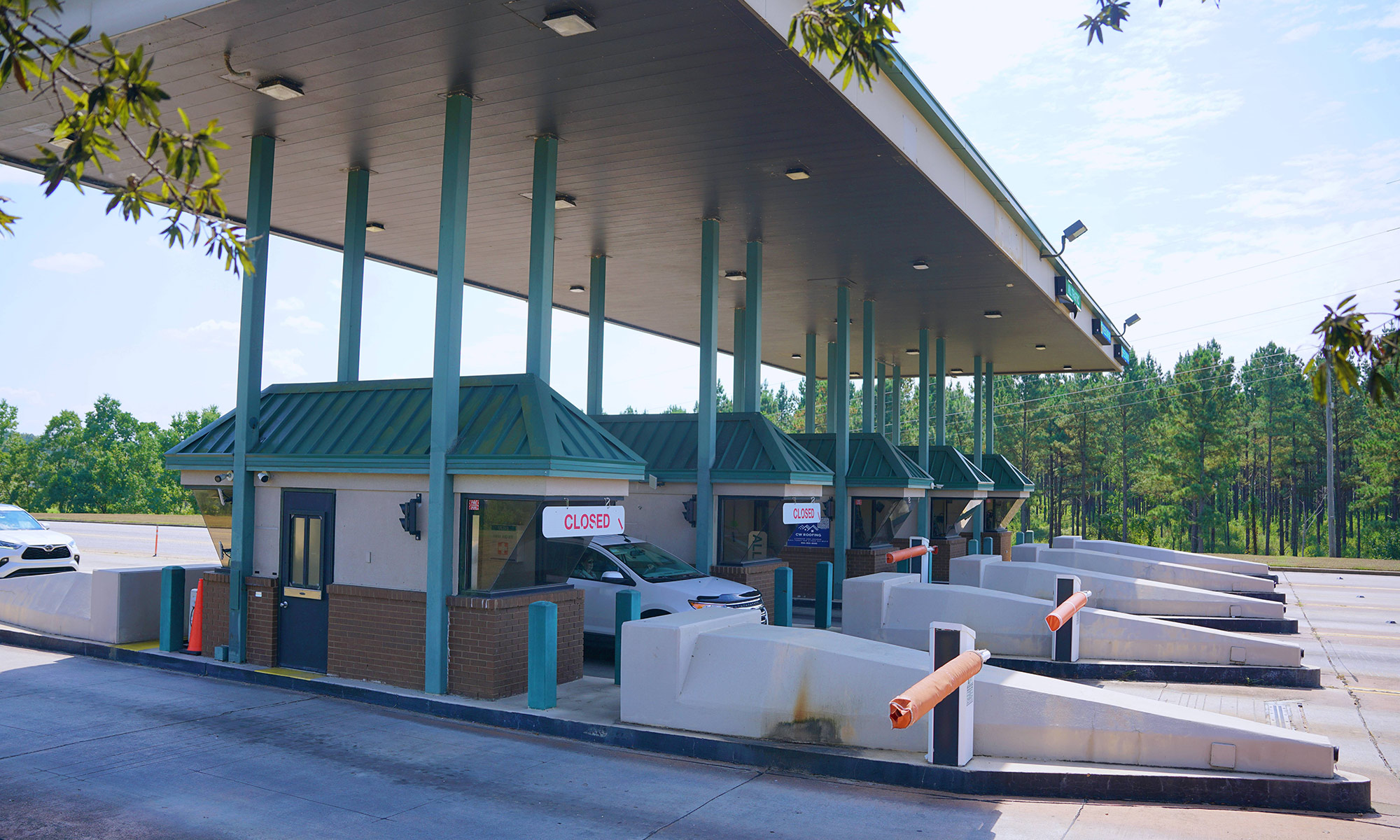
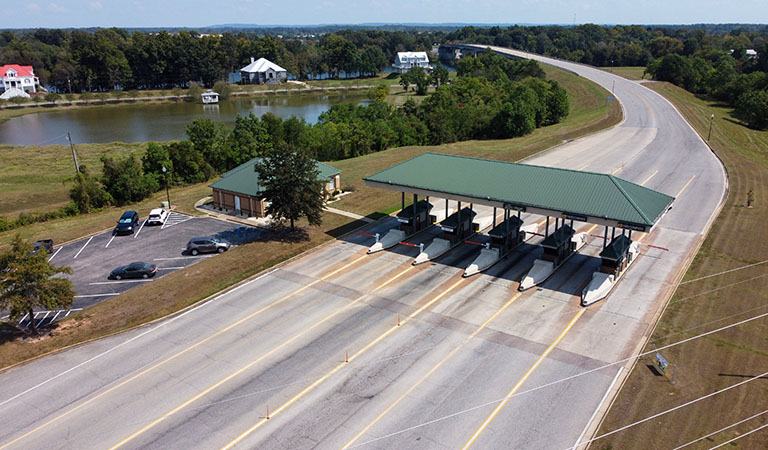
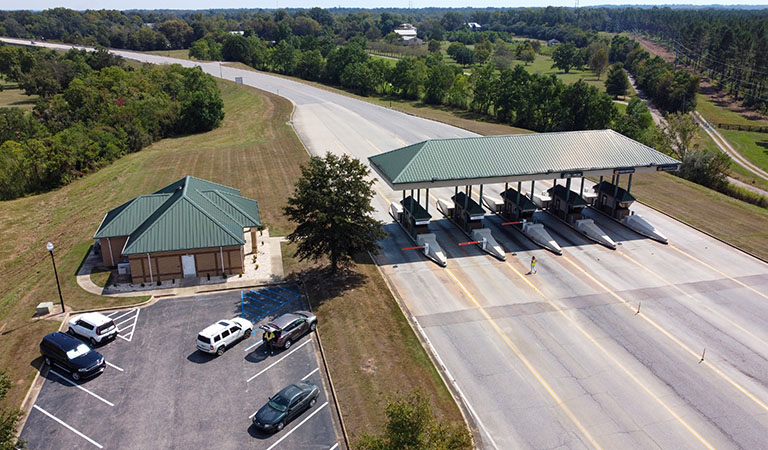
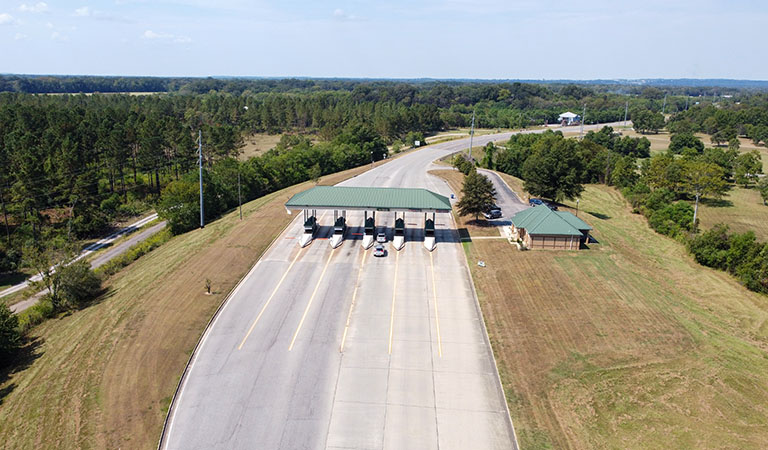
The Montgomery Expressway, formally known as the Alabama River Parkway, was conceived during the late 1990s as a way to ease mounting traffic congestion between Montgomery and its fast-growing northern suburbs, including Millbrook and Prattville. At the time, Interstate 65 was increasingly strained, and a more direct, high-capacity alternative was needed to connect the region efficiently.
Construction of the expressway began in the late 1990s, spearheaded by United Toll Systems and backed by private financing. The project included the development of a four-lane highway and a 1,013-foot toll bridge crossing the Alabama River. In 1998, the Montgomery Expressway officially opened, offering a scenic, time-saving corridor for regional commuters and freight vehicles.
Unlike many other infrastructure projects, the Montgomery Expressway was entirely privately funded, marking a new chapter in how Alabama approached modern road development. Its toll structure enabled sustainable operations without drawing on public funds, and its location was strategically chosen to minimize travel distance while maximizing access to Montgomery’s business, government, and cultural districts.
Since opening, the expressway has implemented new technologies and system upgrades to enhance the traveler experience. Toll collection transitioned into electronic options such as Freedom Pass, while modern monitoring and maintenance protocols were introduced to maintain safety and reliability.
The expressway has become a trusted part of daily life for thousands of drivers and has contributed to economic expansion in the region. Its history reflects a blend of engineering foresight, transportation need, and private-sector leadership. Today, the Montgomery Expressway continues to fulfill its founding mission—connecting communities and providing a direct path into the heart of Alabama’s capital.
Late 1990s
Conceptualized as a high-capacity alternative to I-65, aiming to connect Montgomery with Millbrook and Prattville.
Late 1990s
1998
Completed and opened; the four-lane, privately funded Alabama River Parkway officially began operations.
1998
Early 2000s
Rolling adoption of electronic tolling began.
Early 2000s
Mid-2000s
Freedom Pass system introduced; drivers enjoyed dedicated lanes, contactless discounted payments, loyalty rewards, and seamless crossings.
Mid-2000s
Ongoing
Revenues continually reinvested into safety, technology upgrades, road maintenance, lighting, and customer service improvements.